
Bovine Fetal Mummification
A historical entry from the OASIS animal picture blog. Original observations and discussion are preserved; this entry has not received a new veterinary review. Some photographs show clinical procedures.
Mummification happens when a fetus dies inside the uterus but the pregnancy is maintained. Thus the dead fetus is not expelled (which usually happens in 7-10 days after its death) and shrivels up. The pregnancy does not get terminated because either the dead fetus is one of a twin (the other being alive), which is rare or the persistence of the Corpus luteum of pregnancy in the mother. Fetal mummification is also seen sometimes in ewes and mares with twin fetuses.
Two types of mummification have been encountered in domestic animals; the hematic and the papyraceous type. While the former is seen only in cattle and is most commonly observed in the Channel Island breeds; the papyraceous type occurs in all species.
Genetic or chromosomal defects, torsion or compression of the umbilical cord, placental defects, infectious agents and abnormal hormonal concentrations are the usual suspect causes behind mummification.
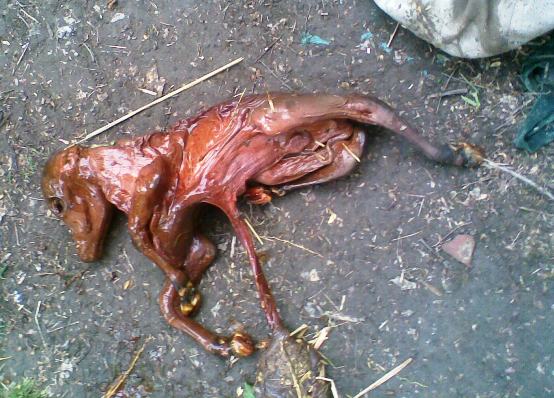
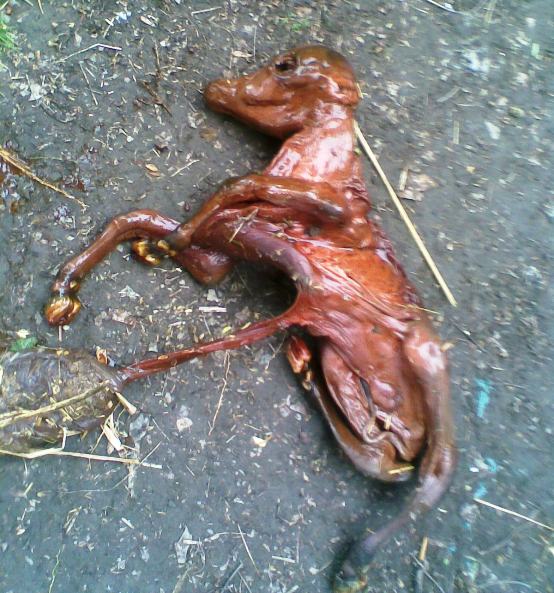
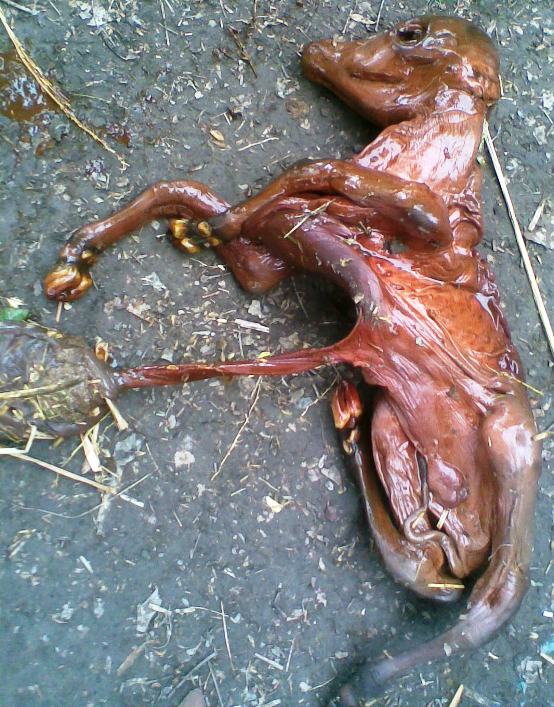
Pic credits: Dr Khurshid Ahmad Shah
From the original discussion
Archived comments are preserved in their original context. New comments are closed.
WHT IS THAT ???????